


DANA Indonesia Digital Wallet
PT Espay Debit Indonesia Koe
I found DANA Indonesia Digital Wallet easy to understand within minutes, which is exactly what I want from a finance app. It is built for cashless and card-less payments, but its real test is not the first successful transaction. The more important question is whether it remains useful after the novelty disappears, when it becomes part of ordinary routines such as paying bills, sending money, or leaving a physical wallet at home.
My overall impression is positive, with an important qualification: DANA works best for people who regularly make digital payments in Indonesia and want several everyday money tasks gathered in one place. It is less compelling for someone who only needs a bank account, prefers cash, or wants a single-purpose payment tool with no extra financial activity around it.
What DANA feels like after the first week
The app comes from PT Espay Debit Indonesia Koe and sits firmly in the finance category rather than trying to behave like a full traditional bank. That distinction matters. I think of it as a practical layer between my money and the places where I spend it: useful for quick transactions, convenient for recurring errands, and less intimidating than handling every payment through separate banking screens.
During the first week, the strongest appeal is the reduction in small sources of friction. I can open the app when I need to pay digitally instead of searching for cash, a card, or a separate service. That convenience is most noticeable in situations where speed matters, such as settling a purchase at a busy counter or handling a payment while away from home.
The free price also lowers the barrier to trying it. DANA is available to users rated Everyone, and it supports devices running Android 5.1 or later. Those details make it approachable for people who are not using the newest phone, although the quality of the overall experience will still depend on the device, connection, and the payment method attached to the account.
Related News

Why WhatsApp Messenger Still Makes Everyday Communication Feel Easy

Jurassic World: The Game Is the Better Dino Tycoon for Strategic Players

Threads in Real Life: Who Should Join, Lurk, or Leave

How SHEIN Turned Shopping Into an Endless Content Feed

How to Make Fortnite Feel Smarter on Mobile

Should You Switch to Microsoft Outlook on Mobile?
I would not judge the app solely by how quickly it can be opened or how polished the first transaction feels. A wallet earns its place when I remember to use it naturally. The first-week advantage is therefore less about excitement and more about establishing one dependable habit: checking DANA first when I need to make a small digital payment.
A realistic everyday routine
Imagine leaving home for work with only a phone. At lunch, I use DANA for a cashless purchase, then later handle a household bill from the same general financial hub rather than switching between several unrelated apps. In the evening, I send money to a family member or settle a shared expense. That is the kind of day in which the app makes sense: not because one action is extraordinary, but because several ordinary actions become easier to remember and repeat.
The trade-off is that a digital wallet is only convenient when the account is ready before the moment of need. I would set it up while I have time, confirm the relevant payment route, and avoid treating the first urgent purchase as a test. A few minutes spent understanding the interface and checking the transaction details can prevent the most annoying kind of payment problem: discovering a setup issue while standing in a queue.
Gallery
What the large user base tells me
DANA has passed 100 million installs and holds an average rating of 4.5 from around 10 million ratings. That level of adoption suggests that it has become a familiar option rather than a niche experiment. I also noticed that the store record shows around 3,400 written reviews, which is useful context: the headline rating reflects a very broad user response, while written comments provide more room for people to describe specific experiences.
Popularity does not guarantee that every user will enjoy the app. A large wallet can still feel unnecessary if my bank already handles everything I do, or if the merchants and people I deal with use another payment method. I see the adoption figures as evidence that DANA is worth considering, not as a reason to install it without thinking about my own routine.
Why it can keep earning space month after month
The lasting value comes from repetition. A wallet is not usually an app I open for entertainment; I keep it because it removes enough small hassles to justify staying installed. DANA has a credible chance of doing that for users who make frequent cashless payments, need a convenient way to move money, or prefer having daily transactions separated from their main bank interface.
One useful habit is to make DANA the first place I check for routine payments, while keeping a bank app available for tasks that require a more traditional banking relationship. This division prevents the wallet from being judged unfairly as a complete replacement for every financial service. It also gives each app a clearer job, which reduces confusion when I need to find a transaction or decide where money should remain.
Another practical use is shared spending. If friends or relatives regularly reimburse one another, a digital wallet can make those small exchanges less awkward than handling exact cash. The benefit is not only speed. It also creates a clearer digital trail than a vague promise to settle later, provided I review the recipient and amount before confirming.
I would also use it for planned errands rather than only spontaneous purchases. Before a busy day, I can identify which payments I expect to make and ensure that my phone, account, and preferred funding route are ready. This turns the wallet into a routine tool instead of an emergency tool. That distinction is important because every payment app feels excellent when everything works and frustrating when preparation is missing.
Where it compares well with usual alternatives
Compared with carrying cash, DANA is more convenient for people who dislike counting change, need to send money remotely, or want to complete payments without a physical card. Compared with using a bank app for every purchase, it can feel more focused on quick daily transactions. The advantage is strongest when I want a simple payment layer rather than a full account-management experience.
On the other hand, a bank app may be the better choice for someone who wants balances, transfers, savings, and other formal banking tasks in one established place. Cash remains better when a merchant does not accept digital payment, when connectivity is unreliable, or when I need a method that does not depend on a charged phone. A competing wallet may also be preferable if the people I pay or the businesses I visit already organize their transactions around that alternative.
That comparison keeps my expectations realistic. DANA is not automatically the best financial app simply because it is widely used. Its strongest position is as an everyday digital wallet that complements other money tools. For me, the question is whether it removes enough repeated friction to deserve a permanent spot on the home screen.
Small workflows that make a difference
My first tip is to separate “payment ready” from “payment completed.” Before confirming anything, I would pause long enough to check the recipient, total, and purpose. Fast interfaces encourage fast decisions, but speed is valuable only when it does not create a correction task afterward.
My second tip is to use a consistent naming habit outside the app when tracking shared expenses. If I send money for lunch, transport, or a household item, I record that purpose immediately in my own notes. A wallet can make the transfer easy, but personal organization still matters when several small transactions accumulate.
My third tip is to keep an alternative available. I would not leave home assuming a phone-based wallet is the only possible payment method. A backup card or modest cash reserve protects the convenience of DANA from battery problems, connection trouble, or a merchant that does not accept the method I planned to use.
These are not glamorous features, but they determine whether the app remains pleasant. The wallet itself can shorten a transaction; the surrounding habits determine whether I trust it enough to use repeatedly.
Maintenance, friction, and the reasons I might stop using it
The maintenance burden is fairly ordinary for a finance app, but it should not be ignored. I need to keep the phone usable, protect access to the account, pay attention to transaction confirmations, and review activity often enough to notice anything unexpected. The app may be free to install, yet digital money is never free of responsibility. Convenience does not remove the need for caution.
I also expect some friction whenever a payment depends on several moving parts: the phone, the network, the merchant’s system, and the funding source. If one link fails, the wallet can feel responsible even when the problem sits elsewhere. That is why I prefer to open the app before reaching the checkout point, especially when I am in a hurry.
Updates are another part of long-term ownership. DANA’s current version is 2.128.0, so the experience is clearly maintained rather than abandoned. Still, maintenance can bring interface changes that force me to relearn where familiar actions are located. I see that as a normal cost of a living financial product, but users who dislike changing layouts may find it tiring over time.
What creates fatigue
The main source of fatigue is not the basic payment action. It is the mental overhead around digital finance: deciding which app to use, remembering how money entered the wallet, checking whether a transfer went through, and keeping track of several small balances or records. DANA can reduce this burden when I use it consistently, but it can also add another layer if I already have too many payment apps.
Promotional language, changing offers, or extra sections can also distract from the simple task I opened the app to complete. I prefer a wallet that lets me reach payment and transaction information quickly. If the surrounding interface repeatedly pulls my attention toward things I do not need, the first-week appeal can fade even when the core function remains useful.
There is also a trust issue that applies to every digital wallet. I would not use DANA casually on a shared or unsecured device, and I would avoid confirming a payment while distracted. Someone who wants maximum separation between spending and technology may feel more comfortable with cash or a conventional card. That is not a failure of DANA; it is a genuine difference in what people consider convenient.
Who should choose it, and who should skip it
I would recommend trying DANA if you make frequent cashless purchases, regularly send small amounts to other people, or want a wallet that can sit alongside your bank account. It is particularly suitable for someone building a digital-payment routine from scratch because the free entry point makes experimentation less risky.
I would be more cautious if you rarely pay digitally, have unreliable internet access, or already use a bank and another wallet without any frustration. Installing DANA in that situation may simply create another account to maintain. I would also skip it as a primary solution if I need a complete replacement for formal banking services rather than a convenient payment companion.
For families, the decision depends on how money is shared. A wallet can simplify small reimbursements, but each person still needs clear habits around recipients, amounts, and confirmation screens. For older relatives or less confident smartphone users, the app may be approachable, yet I would help them establish safe routines before relying on it for important payments.
My long-term verdict
After the novelty fades, DANA remains worthwhile when it becomes part of a clear routine. I would keep it installed for regular cashless payments and quick transfers, not because a wallet is exciting, but because repeated small conveniences add up. The app’s broad adoption, free price, and accessible age rating support that role, while the Android compatibility makes it available to people using older devices.
My reservation is that convenience can become clutter when I use too many financial apps at once. DANA earns lasting space only if I give it a defined job and review my transactions instead of treating it as an invisible payment button. Used that way, it complements a bank app and reduces dependence on cash without pretending to replace every financial tool.
The developer, PT Espay Debit Indonesia Koe, has kept the product active through its current release, and the strong average rating indicates that many users find the overall experience dependable. I would still judge it by my own payment habits rather than by popularity. A widely installed app can be the wrong choice for someone whose merchants, family, or bank already work better elsewhere.
My final recommendation is straightforward: install it if you want a practical Indonesian digital wallet and are willing to maintain sensible payment habits. Give it a defined role, keep a backup payment option, and check each transaction before confirming. The real strength of DANA is not the first fast payment; it is the possibility of making many ordinary payments feel routine.
FAQs for DANA Indonesia Digital Wallet
What is DANA Indonesia Digital Wallet?
DANA is a comprehensive digital wallet service in Indonesia that allows users to make seamless transactions, pay bills, and transfer money. It offers an efficient way to manage finances through a mobile app, supporting both Android and iOS devices. The app is designed to provide a secure and convenient platform for all your financial needs.
Is DANA safe to use for financial transactions?
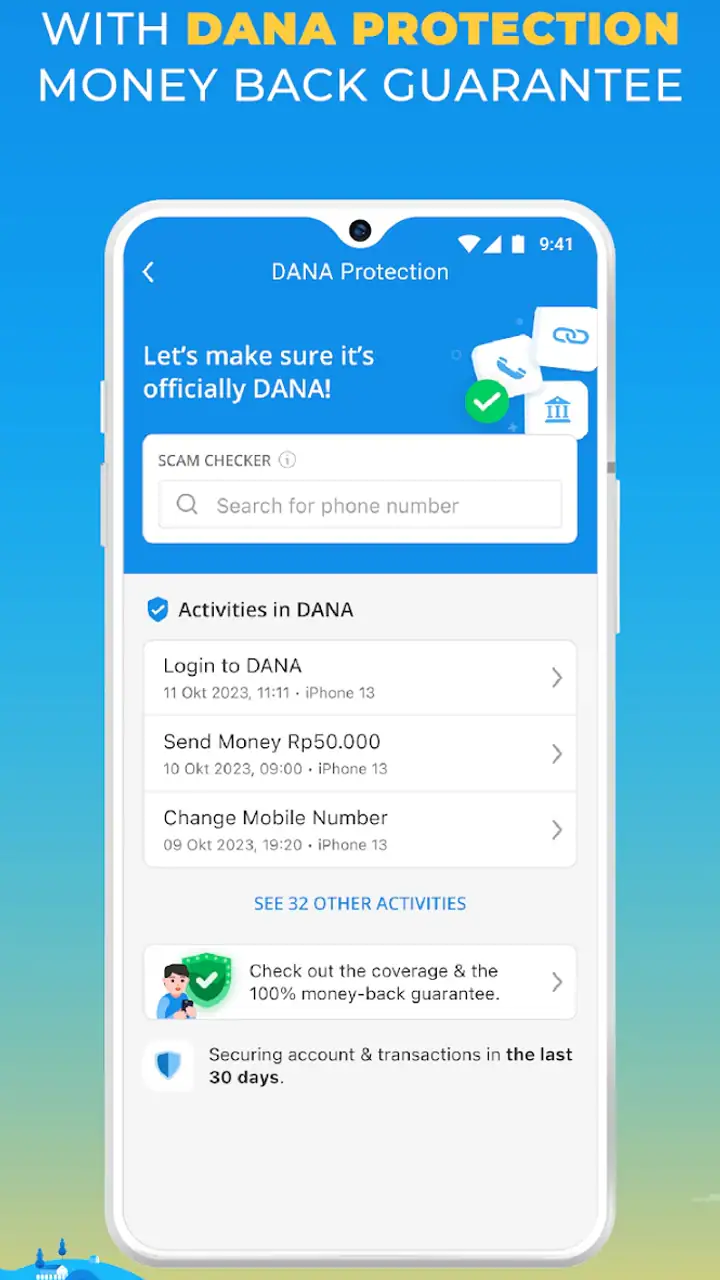
Yes, DANA prioritizes user security by employing advanced encryption technology and multi-factor authentication. The app continuously updates its security measures to protect users' personal and financial information from unauthorized access, ensuring a safe environment for all transactions. Users can confidently use the app for their daily financial activities.
What features does DANA offer?
DANA provides a wide range of features, including bill payments, mobile top-ups, and QR code transactions. Users can also send and receive money instantly, enjoy exclusive offers, and access a digital savings feature. The app supports various payment methods, making it versatile and convenient for users looking to streamline their financial tasks.
Are there any fees associated with using DANA?
While DANA offers many free services, certain transactions may incur fees. For example, transferring money to bank accounts or using certain premium features might involve a small charge. It's advisable to check the app's terms and conditions or consult their customer support for the most current fee structure before proceeding with transactions.
Can DANA be used internationally?
DANA is primarily designed for use within Indonesia. While it excels in providing local services, its international capabilities are limited. Users planning to use DANA outside of Indonesia should verify the app's functionality and any potential restrictions in their destination country to ensure a smooth experience.
Pros
- User-friendly interface
- easy navigation.
- Quick and secure transaction processing.
- Wide range of payment options available.
- Integration with popular services.
- Attractive promotional offers and rewards.
Cons
- Limited support for international transactions.
- Occasional app performance lags.
- Verification process can be lengthy.
- Some users report login issues.
- Limited customer support availability.


